
The comprehensive implementation of labour codes defines ease of doing business while safeguarding workers’ rights and welfare.
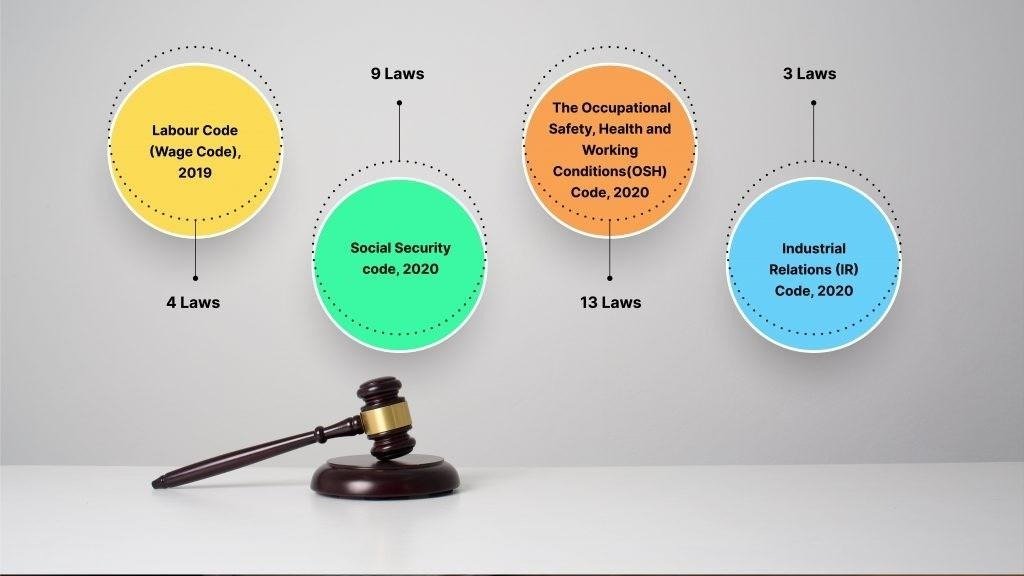
In the recent development the Government of India after due deliberations have come up with the Labor Law Codes in merging the ease of doing business with keeping the welfare of the workers in mind. The Government has consolidated 29 Labor Laws into 4 comprehensive legal codes to implement the reforms.
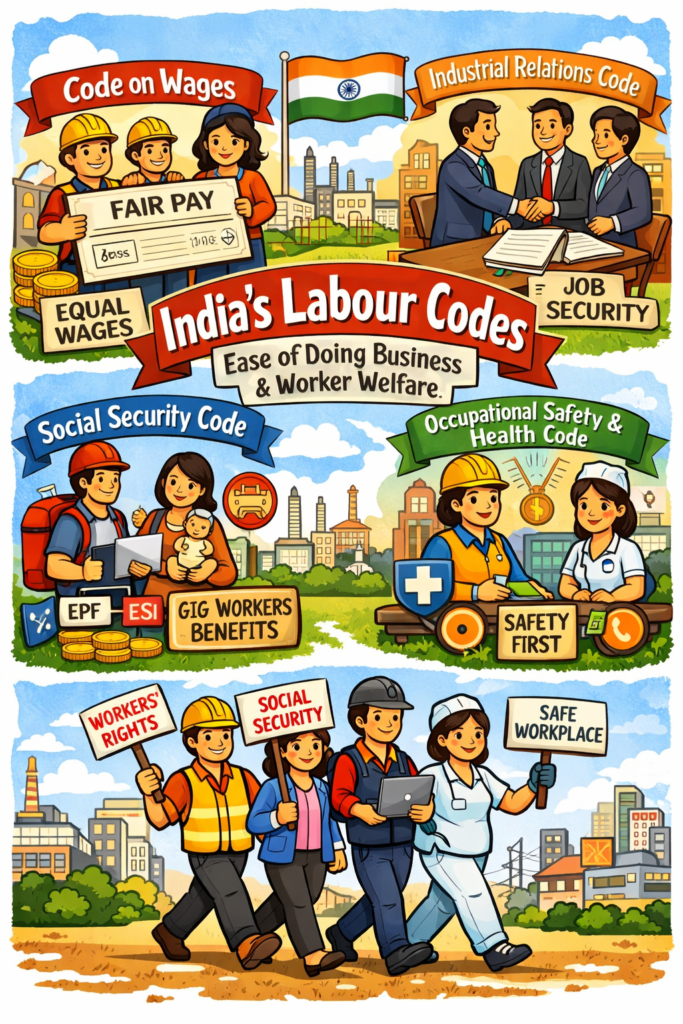
From factory floors to gig platforms—rights now have a legal backbone.
The reforming journey dates back to 2019 wherein the government introduced the Wages Code which in essence dealt with compromising 4 essential wages and payment related Labor Laws in a single code titled The Code On Wages, 2019. It, in essence consisted of :- The Payment of Wages Act, 1936, The Minimum Wages Act, 1948, The Payment of Bonus Act, 1965 and The Equal Remuneration Act, 1976. The changes introduced in the code make the wage distribution much more liberal, equal and promising to the workers. The amendments talks about ensuring minimum pay for every employee regardless of their gender, industry, category or nature of employment they are concerned with, it moves forward with providing legal safeguard nationwide helping in reducing the wage disparity among the workers. It also jumps into promoting social justice and equity by narrowing the wage gap and additionally works upon enhancing the income security and the living standards of the employees.
In advent and successful implementation of The Code on Wages, 2019 the parliament in 2020 set forth with the discussion upon other major aspects that needs to be taken into consideration whilst making a reformative environment for the workers in order to get benefitted.
So, the parliament in the year 2020 passed other three codes which included firstly The Industrial Relations Code, 2020 embarking on the implementation and introduction of fixed employment term for the worker, streamlined process of dispute resolution which may arise between the worker and the employer and lastly the improved worker security. Secondly The Code on Social Security, 2020 embarks on maintaining the universal security and welfare of the Gig and Platform workers by introducing the implementation of key benefits which broadly includes the EPFO and ESIC coverage as well as a definite payment to the Gig and Platform workers with contribution in their remuneration from the employers annual turnovers. The benefits also jumps on to include maternity leaves to the female workers employed. Lastly, The Occupational Safety, Health and Working Conditions Code, 2020 moves on to enunciate the benefit by expanding coverage to more sectors, which includes to ensure free health check-ups on an annual basis; to enable women to work night shifts without their safety being compromised and drawing things to a close by mandating safer work conditions in order to boost productivity and reduce absenteeism. . Although, these codes were passed by the parliament in 2020, the Government Of India officially brought these Labor codes into implementation on November 21, 2025.
These codes, once implemented, are indeed going to bring about a significant transformation in India’s evolving workers’ rights mechanism. Moreover, the gig-worker economy is poised for a substantial shift in its legal and social standing, as the new reforms are expected to facilitate formal recognition of gig workers and provide them with protections that place them on a an equal footing with workers employed in the organized sector without altering the fundamental nature of their work.
REFERENCES
The Code On Wages, 2019,pib.gov.in
The Industrial Relations Code, 2020, pib.gov.in
The Code on Social Security, 2020, pib.gov.in
The Occupational Safety, Health and Working Conditions Code, 2020, pib.gov.in
labour.gov.in, Ministry Of Labor and Employment
https://prsindia.org
Article by Mayank Sinha
Legal @ Singhania & Co