
INTRODUCTION
The judiciary, also known as the backbone of the Constitution, is a crucial part of the government that plays a key role in ensuring that laws are fair and applied equally to everyone. Society remains orderly largely because of the judiciary. Its primary function is to interpret existing laws and ensure they are implemented in a manner that protects people’s rights and promotes justice for all. The judiciary has an obligation to uphold the rule of law and maintain a healthy democracy in the country. By upholding the principles of equality and justice, the judiciary helps create a fair and inclusive society where everyone has the opportunity to thrive.
WHAT IS DISCRIMINATION?
Discrimination occurs when someone is treated differently or unfairly because of who they are, such as their caste, race, gender, age, religion, disability, or other personal characteristics, resulting in unequal rights or opportunities. When discrimination occurs, it can lead to social unrest, inequality of opportunity, hindrance to development, and intergenerational problems. It can spark conflicts and disputes among people, creating a divisive and hostile environment.
Discrimination can deny individuals the chance to receive recognition for their work, leading to a lack of motivation and a sense of injustice. Preventing discrimination is essential to ensure that everyone has an equal opportunity to succeed and contribute to society. Discrimination based on color, complexion, physique, or caste can lead to unequal treatment and limited opportunities. It is crucial to recognize the importance of equality and take steps to prevent discrimination in all its forms.
FREEDOM FROM BIAS BEHIND THE BARS
Issues of casteism are often very common in rural areas. In India, prisoners belonging to lower castes or poor and marginalized groups are often treated unfairly and unequally inside prisons. They are more vulnerable to mistreatment, harassment, and poor living conditions, reflecting deep-seated social prejudices.
Dalits, Adivasis, and other weaker and marginalized communities are disproportionately represented behind bars and face unequal treatment, including lack of adequate food, limited access to healthcare, and poor living conditions. This perpetuates inequality and reinforces social hierarchies. The prison system often continues these unfair practices, and the justice system does not provide sufficient support to everyone. As a result, many people do not receive real justice.
To address these issues, training and awareness programs for prison staff are essential, along with strict rules to ensure that all prisoners are treated equally.
“The shadows of history cast long, but we can step into the journey of equality.”
CASTE SYSTEM AND ITS CONTINUING IMPACT IN INDIA
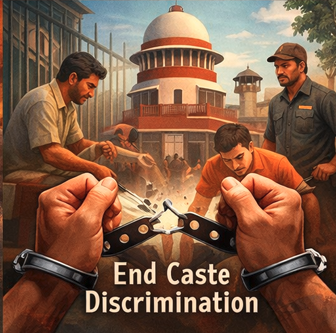
In India, the caste system has evolved and changed over time and has been influenced by several factors, including the decline of the Mughal Empire and British rule, which reinforced existing social hierarchies. Although the Constitution banned caste discrimination and introduced a reservation system to help marginalized communities after independence, caste-based discrimination continues to persist.
The Maratha quota stir, led by Manoj Jarange, highlights how certain Maratha groups are still fighting for equality and recognition. Jarange seeks reservation benefits for the Maratha community, citing historical injustices and socio-economic challenges. While the Supreme Court has made efforts to reduce caste-based biases, incidents of violence and discrimination against marginalized groups still occur.
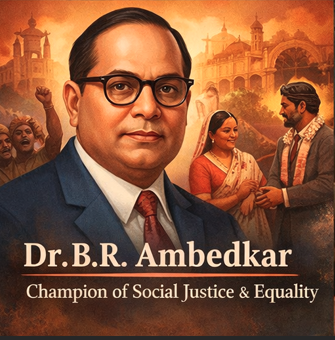
These realities demonstrate the need for continued efforts to promote social justice and equality in India. Dr. B.R. Ambedkar, a pioneer in the fight against caste inequality, envisioned a democratic and equal Indian society for all citizens. He believed that the annihilation of caste was essential and advocated reforms through laws, education, and inter-caste marriages. His vision remains relevant today.
The caste system is inherently unjust because it limits people’s opportunities and freedoms. It restricts access to education, employment, and religious practices, creating an unfair system where power and resources are controlled by a few. This results in widening inequality, where individuals are judged by birth rather than ability.
THE LINGERING SHADOW – CASTE
Caste-based discrimination remains a complex social and economic issue. It assigns status, privileges, and restrictions based on inherited caste identities rather than individual merit. Lower-caste communities are often denied equal access to employment opportunities, social platforms, privileges, and quality education. Many are forced into tedious work with little or no pay and poor working conditions, perpetuating poverty and hardship.
Such systemic discrimination leads to severe mental health issues and trauma, compounded by limited access to proper nutrition and healthcare. Physical suffering becomes more pronounced due to these disadvantages.
In 2024, the Supreme Court of India delivered a landmark judgment in Sukanya Shantha v. Union of India, declaring caste-based discrimination in prisons unconstitutional. The Court held that assigning work based on caste lines and subjecting lower-caste prisoners to harsher labor violates Article 14 (equality before law) and Article 15 (prohibition of discrimination) of the Constitution.
The Court ruled that prisoners cannot be segregated, assigned specific jobs, or labeled as “habitual offenders” solely based on caste. This judgment reinforces the principle that every individual deserves dignity and respect, regardless of background.
Discrimination within prisons leads to mental and physical suffering and can escalate into violence among inmates. When prisoners are treated unfairly due to caste, it obstructs rehabilitation and reintegration into society. Such treatment reinforces harmful beliefs of superiority and inferiority, making social reintegration after release extremely difficult.
Conversely, when prisoners are treated equally and with respect, they are more likely to reform and become productive members of society. Equal treatment is not only a matter of fairness but also a crucial step toward rehabilitation and social harmony.
CONCLUSION
Treating prisoners with dignity and equality enables meaningful reform and reintegration into society. Fair treatment provides individuals with the opportunity to change, rebuild their lives, and contribute positively after release. The Supreme Court’s ruling against caste-based discrimination in prisons emphasizes the need for equal opportunities and rehabilitation programs that promote respect and human dignity.
These reforms have far-reaching implications—not only for improving prison administration but also for addressing the deep-rooted social inequalities that continue to affect Indian society.
REFERENCES
- https://pmc.ncbi.nlm.nih.gov/articles/PMC8592103/
- https://scientiatutorials.in/the-history-of-the-caste-system-in-india-origins-evolution-and-impact/
- https://www.investopedia.com/caste-discrimination-and-consequences-8421061
- https://www.drishtijudiciary.com/constitution-of-india/sukanya-shantha-v-union-of-india-ors-2024
- https://www.constitutionofindia.net/articles/article-15-prohibition-of-discrimination-on-grounds-of-religion-race-caste-sex-or-place-of-birth/
- https://www.constitutionofindia.net/articles/article-21-protection-of-life-and-personal-liberty/
By Tuba Khan
Legal Intern @Singhania & Co.