

By Labdhi Jain
BBALLB Honours
“The proviso to Section 223(1) of the BNSS mandates that no cognizance of an offence shall be taken by the Magistrate without giving the accused an opportunity of being heard.” (Extracted from judicial interpretations and statutes)
Overview
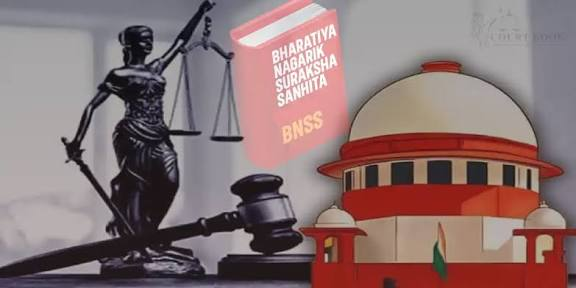
July 1, 2024, marked a major shift in India’s criminal justice system with the replacement of the old CrPC (Code of Criminal Procedure, 1973) by the Bharatiya Nagarik Suraksha Sanhita, 2023 (BNSS). This change introduced stronger procedural protections for individuals facing prosecution.
A key reform appears in Section 223 of the BNSS, which corresponds to Section 200 of the CrPC and governs the procedure when a Magistrate takes cognizance upon a complaint. Unlike the CrPC provision, the proviso to Section 223(1) BNSS explicitly prohibits taking cognizance without first affording the accused an opportunity to be heard.
This pre-cognizance hearing acts as a vital safeguard, enabling the accused to make submissions before the court formally assumes jurisdiction over the case.
This procedural change carries particular importance for prosecutions under special laws such as the Prevention of Money Laundering Act, 2002 (PMLA), where complaints are instituted under Section 44(1)(b). Courts have now held that BNSS provisions govern such complaints instituted after July 1, 2024.
Key Supreme Court Ruling in Kushal Kumar Agarwal v. Directorate of Enforcement
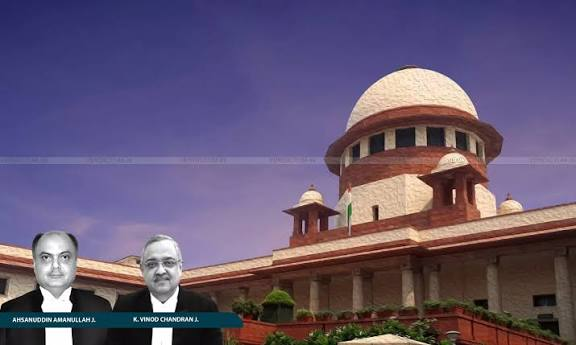
In Kushal Kumar Agarwal v. Directorate of Enforcement, 2025 SCC OnLine SC 1221, a complaint under the PMLA was filed on August 2, 2024. The Special Judge proceeded to take cognizance without hearing the accused, which was challenged before the Supreme Court.
The Court referred to its earlier pronouncements to reaffirm that procedural provisions of the CrPC (Sections 200–204) had historically applied to PMLA complaints. Following the repeal of the CrPC and enforcement of the BNSS, the corresponding provisions (Sections 223–226) now govern such matters for complaints filed on or after July 1, 2024.
As the complaint in question was instituted post-BNSS, the Court declared the pre-cognizance hearing under the proviso to Section 223(1) mandatory. Solely on account of non-compliance with this requirement, the cognizance order was set aside.
Follow-up Decisions by High Courts
The principle laid down in Kushal Kumar Agarwal has been consistently followed:
- In Lakshay Vij v. Directorate of Enforcement, 2025 SCC OnLine Del 8285, the Enforcement Directorate filed a PMLA complaint on September 19, 2024. Despite the accused seeking a pre-cognizance hearing, the trial court took cognizance without it. The Delhi High Court, relying on Kushal Kumar, set aside the order, emphasising the mandatory character of the BNSS proviso and its clear departure from the CrPC framework.
- Likewise, in Sajil John v. Assistant Director, Directorate of Enforcement, 2025 SCC OnLine Ker 5532, the Kerala High Court quashed a cognizance order passed in violation of Section 223(1) BNSS, applying the Supreme Court’s reasoning directly.
These decisions firmly establish that:
- BNSS procedural safeguards apply to PMLA prosecutions.
- The right to a pre-cognizance hearing is compulsory for complaints filed after July 1, 2024.
- Breach of this requirement is sufficient ground to invalidate the cognizance order.
The Issue of Supplementary Complaints
In many PMLA proceedings, an initial complaint is followed by supplementary complaints that add facts, evidence, or accused persons. An important question therefore arises:
Does the BNSS hearing requirement extend to a supplementary complaint filed after July 1, 2024, when cognizance on the main/earlier complaint was taken before that date under the CrPC (i.e., without any hearing)?
The Madras High Court recently addressed this in G Ganesan v. Deputy Director, Directorate of Enforcement, 2025 SCC OnLine Mad 11885 (judgment dated December 8, 2025). It ruled that the benefit of the proviso to Section 223(1) BNSS does not apply to such supplementary complaints.
The Court placed reliance on Section 531(2)(a) BNSS, which provides that investigations already commenced under the CrPC shall continue to be governed by the old Code. Accordingly, where the principal case and cognizance pre-date July 1, 2024, the new hearing safeguard does not attach to later supplementary filings.
Broader Implications and Future Outlook
The judgments in Kushal Kumar Agarwal and the subsequent High Court rulings lay down several important propositions:
- Procedural reforms introduced by the BNSS extend to prosecutions under special statutes like the PMLA.
- Accused persons now enjoy a mandatory early opportunity to be heard before cognizance, which may help filter out weak or untenable cases at the threshold and reduce unnecessary prolonged litigation.
- Non-compliance with the proviso to Section 223(1) BNSS is, by itself, fatal to the cognizance order.
Certain practical aspects, such as the precise nature, scope, and permissible content of the pre-cognizance hearing, still await fuller judicial elaboration, as these were not addressed in Kushal Kumar.
A conclusive ruling from the Supreme Court on the applicability of BNSS safeguards to supplementary complaints filed after July 1, 2024 (in cases where the main complaint predates the transition) is also awaited to settle the position definitively.
Conclusion
It is now well settled that for any complaint under Section 44 of the PMLA instituted after July 1, 2024, a pre-cognizance hearing for the accused is mandatory.
These developments reflect a balanced approach that upholds effective prosecution of serious economic offences while strengthening core fair trial protections under the new criminal justice regime.
Footnotes
- Kushal Kumar Agarwal v. Directorate of Enforcement, 2025 SCC OnLine SC 1221
- Yash Tuteja v. Union of India, 2024 SCC OnLine SC 533
- Tarsem Lal v. Enforcement Directorate, (2024) 7 SCC 61
- Lakshay Vij v. Directorate of Enforcement, 2025 SCC OnLine Del 8285
- Sajil John v. Assistant Director, Directorate of Enforcement, 2025 SCC OnLine Ker 5532
- G Ganesan v. Deputy Director, Directorate of Enforcement, 2025 SCC OnLine Mad 11885