
The morning of January 27, 2025, dawned like any other in Pothundy, a village in Kerala’s Palakkad district. In one modest home lived Sudhakaran, a 50-year-old widower, his elderly mother Lakshmi, and his two young daughters, Akhila and Athulya (approx. ages 10–12). Their world was ordinary until a horror shattered it.
That day, neighbor Chenthamara (61) barged into Sudhakaran’s house wielding a machete. In minutes, he brutally killed both Sudhakaran and Lakshmi. The daughters, horrified, survived but lost their father and grandmother. “He did not kill just one person,” Akhila and Athulya later told reporters, “he killed our father, our grandmother, and others”. The sisters are now orphaned, living with relatives, forever marked by the bloodshed in the only home they knew.
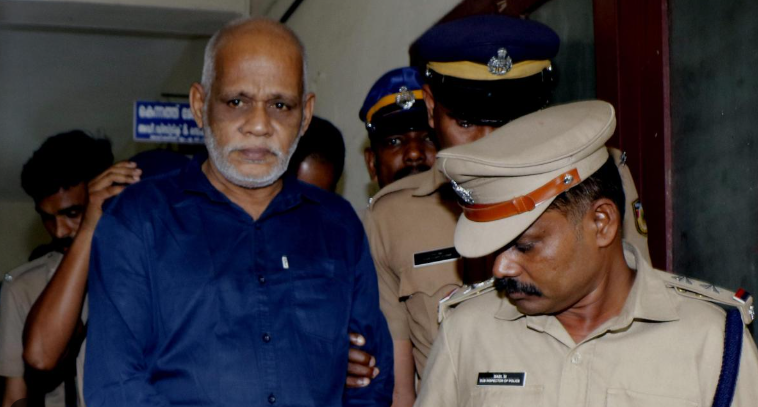
In the aftermath, the community was stunned. This was not a random murder: press reports revealed Chenthamara had a longstanding grudge against the family. He had murdered Sudhakaran’s wife Sajitha in 2019 (claiming witchcraft) and was out on bail. Despite warnings, police had failed to act. Now justice would be tested in court.
The story that follows is both a legal chronicle and a family saga: a narrative of violence, law, and an unusual attempt by the courts to care for the victims’ surviving children. In pursuing truth for Sudhakaran and Lakshmi, this case exposed flaws in policing, and unexpectedly highlighted a rare focus on compensating and rehabilitating the bereaved.
Timeline of Key Events
2019-08-31 Sajitha murdered: Chenthamara kills Sudhakaran’s wife Sajitha. Arrested, later
bailed.
2025-01-27 Double murder: Chenthamara hacks Sudhakaran (55) and Lakshmi (75) to death
at Pothundy.
2025-01-29 Arrest: Police capture Chenthamara in nearby Pothundy forest.
2025-10-18 Sajitha case verdict: Chenthamara gets two life terms (and ₹3.25L fine) for
Sajitha’s murder.
2026-02-26 Trial begins: Fast-track Sessions case (Palakkad) starts hearing evidence in the
double-murder case.
2026-07-13 Guilty verdict: Sessions Court convicts Chenthamara of murder (BNS §103) and
wrongful restraint.
2026-07-20 Sentencing: Judge Kenneth George sentences him to death (rarest-of-rare) and
fine ₹20L for victims. Case referred to Kerala High Court for confirmation.
Each stage unfolded amid intense scrutiny. The daughters and their aunt attended proceedings, observing solemnly as each legal motion was heard. In dozens of hearings, the court pieced together the night’s horror: forensic reports (blood on the murder weapon) and witness statements left little doubt. By July, the slow machinery of justice reached its climax.
With so much at stake, the court meticulously applied India’s laws. Chenthamara faced charges under the Bharatiya Nyaya Sanhita, 2023 (BNS): murder (Section 103(1)) and wrongful restraint (Section 126(2)). In the sessions court, Public Prosecutor M.J. Vijayakumar laid out the prosecution’s case: the attacks were “cold-blooded” ambushes, entirely unprovoked. He detailed the crimes as premeditated; evidence later showed Chenthamara even tried to mislead investigators by planting a bottle of poison to feign suicide.
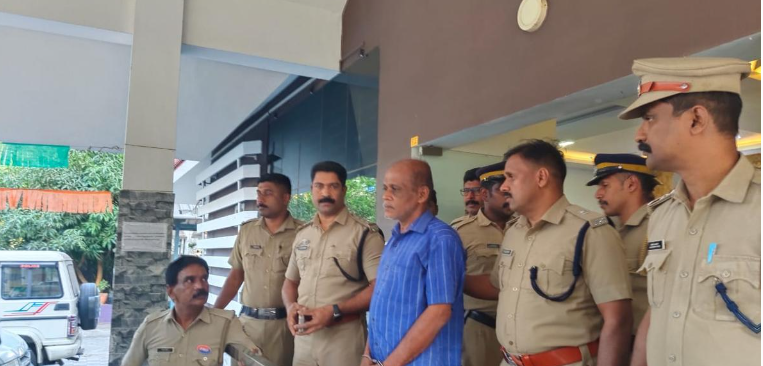
Defense counsel countered that Chenthamara was mentally disturbed or remorseful. In July 2026, the judge even questioned Chenthamara directly on punishment. The accused replied defiantly, “You may sentence me to death” and boasted “I am not like Gandhi; if I am slapped, I kill more”. A District Probation Officer and psychiatrist saw no illness, and Chenthamara’s own words betrayed no regret.
Ultimately, the court concluded that only the death penalty would meet justice’s demands. The judge’s reasoning echoed the strictest precedents (e.g. Bachan Singh v. Punjab): the murders were heinous, involving two helpless victims (including a grandmother) killed in cold blood. Noting Chenthamara’s unrepentant attitude and bail violation, the judge declared him a “menace to society,” incapable of reform.
In formal terms, the court found “special reasons” under the new law. It called the case fit for the rarest-of-rare doctrine, citing aggravating factors such as premeditation and impact on innocent dependents. Thus, on July 20, 2026, Chenthamara was sentenced to death by hanging, alongside a fine of ₹20 lakh. (He also received life imprisonment for restraint, but that was moot given the capital sentence.) The judgment ran well over 100 pages of detailed findings.
The judge explicitly mentioned evidence: forensic tests had matched the victims’ cells on the weapon, and dozens of neighbors testified. The court rejected all defense claims, calling Chenthamara’s lamentations “crocodile tears”. In the end, the sentence was automatically sent to the Kerala High Court for confirmation (as per law). No High Court ruling is yet available; the final word will come after the mandatory appeal.
A New Focus: Helping the Victims’ Family
In most cases, sentencing ends with punishment. Remarkably, this court went further: it ordered measures to protect and restore the lives shattered by the crime.
Firstly, the court imposed a ₹20 lakh fine on Chenthamara and earmarked it as compensation for the victims’ family. Noting the convict’s poverty (“no financial means to pay”), the court directed the State to provide the compensation . In effect, Kerala’s treasury must pay the sum, for which the District Legal Services Authority (DLSA) will disburse funds. One prosecutor praised the judgment’s fairness, highlighting that the court recognized Sudhakaran’s orphaned daughters were destitute. As one report put it, “no verdict can truly compensate for what they have lost,” but this compensation will at least ease their financial strain.
Beyond money, the court specifically urged broader rehabilitation. The written order directs the DLSA to ensure the girls receive “meaningful relief and institutional support,” including counseling, education assistance, or any needed services. Even more unusually, Judge George recommended a government job for one of Sudhakaran’s daughters (his eldest).
In Kerala, this would fall under compassionate appointment rules. The idea is to give the young women a stable income so they can care for themselves and each other, since their entire family support structure is gone.
Finally, the court addressed their safety. It ordered that if Chenthamara ever receives parole, witness protection must be ensured for Akhila and Athulya (and any other prosecution witnesses). This was born of tragedy: Chenthamara had brazenly threatened others in the family. The judge noted lapses in policing and declared it unacceptable that grieving relatives live in fear. While a formal witness-protection scheme exists, this case underscores its urgency.
Rehabilitation Measures Comparison
Source/Order Type of Support Beneficiaries Status/Notes
Sessions Court (20-Jul-2026) ₹20 lakh compensation (fine) Sudhakaran’s orphaned daughters Imposed as compensation; State to pay (accused insolvent). Awaiting disbursement via DLSA.
Sessions Court (20-Jul-2026) Government job Elder daughter of Sudhakaran Recommended by judge (for stability/income). Kerala govt to process as per compassionate appointment rules.
District Legal Services Authority Victim compensation & rehab Daughters of Sudhakaran/Sajitha, Lakshmi’s children Court directed DLSA to provide relief. (Implementation in progress; liaising with social services.)
Kerala Victim Compensation Scheme (CrPC §357A) One-time financial grant (₹20k) Dependents of violent crime victims Statutory scheme (e.g. ‘Jeevanam’ grant) exists. The girls should qualify as dependents. Application needed.
Witness Protection (Kerala/NALSA) Security measures Victim-witnesses (victims’ children) Court urged strengthening. If parole granted, police must ensure safety (current status unclear).
The figures here speak volumes: public records show Akhila and Athulya were present in court for verdict, earning the consolation that justice was served, yet they plainly said “no compensation could make up for the loss” of their parents. In the courtroom, they had listened as the judge spoke of job offers and money; outside, they voiced that only Chenthamara’s hanging would bring true safety.
This duality legal closure but personal fear is poignant. A police officer on the case noted that for him “no verdict can truly compensate for what [the daughters] have lost”. Still, the court’s orders are concrete steps. Legal experts say such explicit victim relief is rare in death penalty cases; it effectively treats the victims’ family as secondary stakeholders, not forgotten aftermath.
Kerala’s press extensively covered both aspects of the verdict. Commentators lauded the death sentence as fitting for an “unrepentant menace”. Editorials noted the careful legal reasoning and the judge’s forthright language: one article quoted the court’s depiction of the crime as “savage, barbaric murder” needing “deterrent chastisement”. The daughters’ emotional statements led several papers. Kerala Kaumudi ran the headline, “Happy with verdict, but we’ll live in fear…” quoting the girls. On social media, there was broad support for capital punishment in this case; public sentiment in Kerala has generally favoured harsh penalties for violent crimes.
Notably, many reports highlighted the rehabilitation orders. The SouthFirst and NDTV mentioned the court’s call for a job and state-funded compensation, framing it as a rare but welcome measure. Legal analysts say this approach aligns with India’s growing “victim-centric” laws: for example, CrPC Section 357A (2008) mandated state victim compensation schemes, and Kerala’s own ‘Jeevanam’ scheme provides a small grant to crime victims’ families. However, here the judge went further by not just ordering money (the fine) but explicitly urging stable employment and educational support.
Some defense voices (not prominent in news) may later argue against the death penalty on legal grounds, but at present the narrative in media and public discourse is that of affirmation: the court got it right, and it even cared for the victims. No major dissent has surfaced in print or protests, and human rights groups have not commented publicly, perhaps awaiting the High Court review.
Comparative Context and Policy Implications
This case can be compared to few others. In 2018, after a high-profile custodial death in Kerala, the state government announced ₹10 lakh compensation and a job for the victim’s widow. That was a political response, not a court order. Here, it was the court itself making those links between justice and welfare. India’s Supreme Court has rarely mandated economic relief like jobs; this judgment stands out for its explicit social concern.
Academics studying victim rehabilitation note that Indian law recognizes victim rights in theory (CrPC amendments, victim-offender mediation, NALSA schemes), but practice is uneven. The judge’s observations about the family being “destitute” and the State’s responsibility are echoed in legal scholarship calling for “holistic support” – counseling, financial aid and empowerment of victims. In that light, Kerala’s judiciary here pushed policy into action: a courtroom became a forum not just for punishment, but for social welfare.
Whether this inspires broader change remains to be seen. The case is sure to be cited in future Kerala decisions as an example of balancing offender punishment with victim relief. It may prompt legislators to clarify guidelines for implementing such orders (e.g. specifying that fines in murder cases directly fund victims).
Lastly, by publicly spotlighting the daughters’ plight, the trial may alert police and policymakers to bail and witness protection lapses. The judgment noted inaction despite warnings. This could fuel calls for stricter bail conditions in violent cases and ensure alleged victims get protection orders or resources promptly.
The Nenmara double murder trial was more than a capital crime case; it was a test of justice’s compassion. For Akhila and Athulya, the legal verdict provides some closure but also a testament: courts can consider their future, not just the criminal’s guilt. The rare directives – compensation, job, security reflect an emerging idea that victims’ welfare must be part of the sentence’s legacy.
The death sentence now awaits Kerala High Court confirmation (as required by law). If the HC upholds it, Chenthamara may appeal to the Supreme Court.
2019-08-31
Sajitha (wife ofSudhakaran)murdered
2025-01-27
Sudhakaran (55) andLakshmi (75) killed in Pothundy
2025-01-29
Chenthamara arrested in forest near Pothundy
2025-10-18
Chenthamara convicted (2 lifeterms) in Sajithamurder
2026-02-26
Fast-track Sessions trial begins (CaseNo.490/2025)
2026-07-13
Chenthamara found guilty of murder and restraint
2026-07-20
Sentenced to death;₹20L fine(compensation);referred to KeralaHC
Procedural History – Pothundy/Nenmara Double Murder Case
Sources: We relied on the court’s own written order (excerpted in Livelaw) and reputable Kerala news outlets (SouthFirst, NDTV, Manorama/Kaumudi) for facts and quotes. Legal statutes (BNS 2023, CrPC §357A) and scholarly analyses provided context on victim compensation and sentencing norms. Details not found in sources (e.g. juvenile support schemes post-trial) are noted as assumptions or gaps. Further investigation (RTI, court files, interviews) is recommended to confirm outcomes of the court’s orders and ensure the victims’ children truly receive the aid ordered.