

FROM BANGALORE TO SILICON VALLEY: HOW INDIA LOST THE AI RACE IT DID NOT KNOW IT WAS RUNNING
For two decades, Indian IT carried the nation on its shoulders generating dollars, stabilising the rupee, and lifting millions into the middle class. Now, as artificial intelligence reshapes the West’s appetite for outsourcing, India faces the most consequential stress test in its economic history.
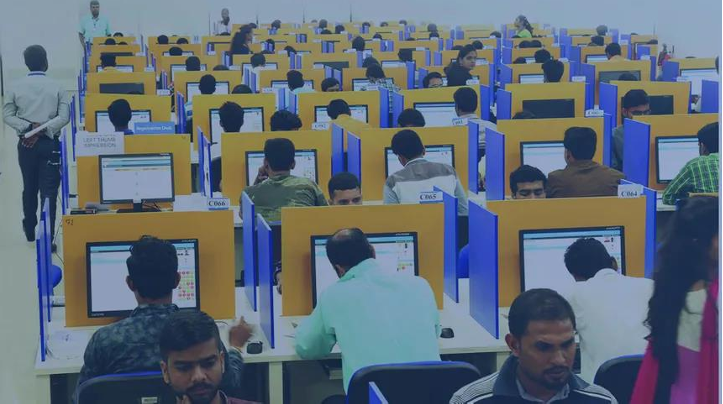
Picture Bengaluru in 2003. A fresh engineering graduate from a tier-two college in Andhra
Pradesh arrives with a single bag and a campus offer letter from Infosys. His salary is ₹12,000 a month more than his father earned in three months of farming. Within five years, he will buy an apartment. Within ten, he will send his daughter to an international school. His story, multiplied across five million families, is the story of modern India’s middle class. And it was powered almost entirely by one industry: information technology services.
That industry is now facing the most disruptive decade in its history.
According to NASSCOM’s Strategic Review 2025, the Indian tech industry reached $282.6 billion in revenue in FY25, employing 5.8 million professionals directly. The IT and BPM sector’s share of India’s GDP grew from just 1.2% in 1998 to approximately 8% by 2020, while export revenue the foreign currency that keeps India’s economy stable has crossed $190 billion in FY24, making it the single largest source of service export earnings in the country. For context, that is more than India earns from petroleum products, gems, or textiles combined. It is the
invisible export that nobody queues to board, carries no shipping insurance, and yet finances a quarter of everything India buys from the world.
For twenty years, that invisible engine kept the rupee anchored. When dollar inflows from IT companies were large and predictable, the Reserve Bank of India had room to intervene, build
reserves, and manage the exchange rate. From ₹85.53 in early 2025 to over ₹95 in May 2026, the Indian rupee has shed more than 10% of its value against the US dollar in little over a year one of the steepest slides since 2013. The causes are multiple a strong dollar globally, a widening trade deficit, sustained foreign portfolio outflows but the weakening of IT sector growth sits uncomfortably behind all of them. Around 81% of Indian IT revenues come from overseas clients, primarily in the US and Europe. When those clients slow their spending, the dollar pipeline that stabilises the rupee narrows. The connection is not theoretical. It is arithmetic.
The Disruption Is Structural, Not Cyclical
The first instinct of industry veterans, when growth slowed in FY24, was to call it a cycle. Clients were tightening budgets after post-pandemic overspending. Silicon Valley Bank had collapsed. Discretionary tech spending was being deferred. The diagnosis was temporary, the prescription was patience, and the expectation was recovery.
That recovery has not come in the form that was expected. TCS, Infosys, and Wipro saw declines of 13,249, 25,994, and 24,516 employees respectively during FY2023–24 the first time in a decade that all three saw simultaneous headcount reductions. Industry body NASSCOM projected that the sector would add just 60,000 jobs in FY24, a figure 80% lower than the 290,000 added the year before. In FY26, TCS let go of 23,460 employees the largest headcount
reduction among Indian IT majors citing its pivot to an AI-first services model and reduced bench requirements per client engagement.
What is actually happening is that AI tools are replacing precisely the work that made India competitive. The traditional model was elegant in its simplicity: a Western company would send repetitive IT work application maintenance, manual testing, back-office support, basic coding to India, where a large pool of English-speaking graduates would execute it at a fraction of the cost. Labour arbitrage was the engine. The roles most directly at risk are those involving repetitive process execution: BFSI back-office support, basic application maintenance, manual testing, data entry, and generic customer support. AI tools are performing these functions at a fraction of the cost. Companies are not laying off people temporarily they are eliminating entire categories of work permanently.

What China Is Doing and Why the Contrast Stings
There is a lesson in the comparison with China, and it is not a comfortable one for Indian policymakers.
China’s AI strategy has been driven by substantial government-backed venture capital investments, with nearly $912 billion allocated over the past decade approximately 23% of that, around $209 billion, directed specifically toward AI firms. China now hosts over 4,500 AI enterprises, accounts for 45% of global computing power, filed 60% of AI patents in 2024, and is expected to invest $85 to $98 billion in AI capital expenditure in 2025 alone.
The contrast with India is not merely quantitative. It is strategic. China began its national AI plan in 2017. India’s IndiaAI Mission, with an initial outlay of $1.25 billion, was launched in March 2024 seven years later. India’s Commerce Minister Piyush Goyal himself acknowledged the disparity, observing that while India is building food delivery and hyperlocal apps, China is investing aggressively in AI and electric vehicles.
China’s DeepSeek which in January 2025 demonstrated frontier model capability at a fraction of American training costs was an event with direct implications for India. It proved that large-scale AI development does not require unlimited capital or unrestricted access to US chips, only sustained state intent and coordinated investment. India has the talent. It demonstrably has the engineers. What it lacks is the decade of infrastructure investment and foundational model development that would allow it to be a creator of AI rather than a consumer of it.
China’s services exports in 2024 stood at $384 billion, ranking eighth globally but Beijing is using AI as the vehicle to close the services gap, building data centres across Southeast Asia and Africa through its Digital Silk Road and positioning Chinese large language models as alternatives for the Global South. India, meanwhile, is still primarily selling services built on top of AI tools developed in America or China. The value capture is fundamentally different.
What Other Countries Are Doing
The Philippines has been quietly building a niche in voice-based BPO services with AI augmentation. Poland and Romania have emerged as nearshore IT destinations for European clients who want lower costs and closer time zones than India. Vietnam and Malaysia are aggressively courting Global Capability Centre (GCC) investments. Eastern Europe, in particular, is benefiting from a shift toward “innovation hubs” over pure cost arbitrage the very direction Indian IT needs to move but has not yet moved fast enough.
What Management Is Doing and What Remains Unfinished
To be fair, India’s IT majors are not standing still. TCS has announced an investment of $6.5 billion to build long-term digital and AI infrastructure. Reliance Industries will invest $11.41 billion to build a 1 GW AI data centre in Andhra Pradesh, scheduled for completion by 2030. Google is investing $10 billion in a hyperscale data centre campus at Visakhapatnam.
The companies themselves are investing in reskilling at a scale unprecedented for Indian industry. Infosys hired 17,000 people in Q1 2025 and plans to recruit 20,000 graduates this year, focusing on AI-driven growth. India’s urban unemployment rate rose to 7.1% in June 2025, reflecting stress in a labour market already dominated by low-wage segments.
The honest assessment is this: the transition from volume-based IT services to value-based AI services is happening, but it is happening more slowly than the disruption it is responding to. Companies that were built to deploy thousands of engineers on maintenance contracts are now trying to restructure themselves as AI solution providers and that is a cultural, architectural, and commercial transformation, not simply a training exercise.
The Hope and What India Must Do
The grounds for optimism are real, even if they require discipline to reach. India has 5.8 million technology professionals, a disproportionate share of the world’s AI engineering talent, and a demographic structure that China no longer has. India’s total AI and cloud commitments crossed
$20 billion in 2025, with Microsoft investing $3 billion, Google committing $15 billion to its Visakhapatnam AI campus, and Meta partnering with Reliance for $100 million in AI and computing infrastructure. That foreign investment is building the infrastructure India needs but infrastructure alone does not create sovereign capability.
Bernstein argues that India’s biggest opportunity lies in developing domain-specific AI models built on proprietary datasets across healthcare, manufacturing, financial services, and industrial automation sectors where India has genuine data scale and business depth. That is the pivot that
would change India’s position from a consumer of Western AI to a producer of domain intelligence that the world buys.
The rupee, for now, sits above ₹95 to the dollar a level that would have seemed alarming five years ago. It is not in freefall, and the RBI’s $640–700 billion reserve buffer provides meaningful insulation. But the structural argument is clear: India cannot maintain its currency stability on the strength of an IT industry selling maintenance services that AI is quietly replacing. It needs IT companies selling AI, not just using it.
The engineer from Andhra Pradesh who arrived in Bengaluru in 2003 with a bag and an offer letter represented a generation that built their future by doing what Western companies could not do cheaply. His daughter’s generation will need to do something different: build what Western companies cannot do at all. That is a harder problem. It is also the only version of the story where India wins.
Authored By Abhishek Goswami
Legal Intern @Singhania & Co.
College: NMIMS, Navi Mumbai, 5th Year
BBA, LLB