
“3-Year Rule: Maturity or Merit Killer?”
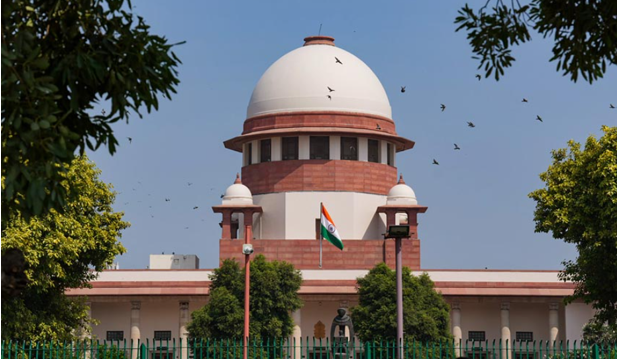
The entry-level recruitment of the Indian subordinate judiciary is currently at a historic crossroads. For over two decades, following the landmark Shetty Commission recommendations and the subsequent Supreme Court ruling in All India Judges Association v. Union of India (2002), fresh law graduates were permitted to don judicial robes immediately after passing their LL.B. exams. However, a seismic shift occurred on May 20, 2025, when the Supreme Court reinstated the mandatory three-year practice requirement for Civil Judge (Junior Division) aspirants.
As we move through 2026, this rule remains the subject of intense litigation, review petitions, and a national debate on whether “maturity” is a product of age and experience or rigorous academic training.
I. The Judicial Pendulum: 1958 to 2025
The debate is nearly as old as the Republic. The 14th Law Commission Report (1958) originally suggested that 3 to 5 years of courtroom experience was essential for a judge to understand the “pulse” of litigation. This was the norm until 2002, when the Supreme Court did away with the requirement. The 2002 Bench argued that the “best talent” was being lost to the private sector and corporate law because brilliant students did not want to wait three years in an often unpaid or underpaid litigation environment.
The reversal in May 2025 was driven by observations from various High Courts that fresh graduates often lacked the “courtroom craft” the ability to handle unruly lawyers, manage witness testimonies, and appreciate the practical nuances of evidence. The Court noted that academic brilliance does not always translate to the temperament required to manage a crowded trial court.
II. Current Legal Status (March 2026)
As of March 2026, the rule is technically in force, but it is under “intensive review” by a Special Bench led by Justice Surya Kant. Recent developments include:
- Extension of Deadlines: In a major directive on March 14, 2026, the Supreme Court ordered all High Courts and State Public Service Commissions to extend application deadlines for Civil Judge posts to April 30, 2026, pending the final outcome of review petitions.
- The “Talent Vacuum” Concern: During recent hearings, the Bench expressed “serious reservations,” noting that the rule might create a three-year vacuum in recruitment, depriving the judiciary of young, meritorious minds.
- Exemptions for Serving Officers: A clarification in November 2025 ensured that judicial officers appointed before May 2025 are exempt from this practice rule if they apply for judicial services in other states.
III. The Core Arguments: Experience vs. Opportunity
1. The Case for the Rule: “The Mature Judge”
Proponents, including the Bar Council of India (BCI), argue that a judge sitting on the bench at 23 or 24 years old lacks the life experience to adjudicate complex matters of life and liberty.
- Procedural Nuance: Litigation experience teaches a lawyer how “processes” are abused in court—something a textbook cannot convey.
- Sensitization: Advocates who have dealt with diverse clients bring a level of human sensitivity to the bench that a “pure academic” might lack.

2. The Case Against the Rule: “The Talent Drain”
Critics argue that the rule is elitist and structurally biased.
- The Gender Gap: Justice Surya Kant recently flagged that the 3-year rule disproportionately affects women candidates. Societal pressures regarding marriage and financial independence often mean that women cannot afford a three-year “waiting period” of low-paying litigation practice.
- Economic Barriers: Litigation in India is notoriously underpaid for juniors. Requiring three years of practice effectively bars candidates from economically marginalized backgrounds who cannot sustain themselves without a steady salary.
- The 20-Year Success Story: From 2002 to 2022, some of the most efficient judicial officers were those recruited directly after law school, proving that intensive training at judicial academies can compensate for a lack of Bar experience.
IV. Proposed “Middle Path” Modalities
The Supreme Court is currently exploring “modalities” rather than a total scrap of the rule. Some proposed solutions include:
- Counting Law Clerkships: Time spent as a Law Clerk-cum-Research Assistant to a Judge is already being recognized as “practice.”
- Intensive Post-Selection Training: Instead of a pre-recruitment hurdle, selected candidates could undergo two years of mandatory “practical training” at the Bar after passing the exam but before taking the oath.
- Legal Aid Service: The CJI suggested that the 3-year practice could involve mandatory service as Legal Aid Counsel, ensuring that the practice period is socially productive and structured.
V. Conclusion: A Question of Judicial Identity
The 3-year practice rule is more than a mere eligibility criterion; it is a statement on what India wants its trial judges to be. Should they be career bureaucrats of the law, like the European civil law model, or seasoned veterans of the courtroom, like the Anglo-American tradition?
As the Supreme Court prepares for its next landmark order in April 2026, the legal community remains divided. One thing is certain: any rule that inadvertently excludes women or the underprivileged in the name of “experience” will face a tough constitutional test against Article 14 (Equality) and Article 21 (Right to Livelihood).
Sources:
- All India Judges Association v. Union of India (2025/2026 Review Petitions).
- Supreme Court Order dated March 14, 2026 (Extension of Application Deadlines).
- Shetty Commission Report on Judicial Reforms.
- Bar Council of India (BCI) Submissions to the Special Bench (Feb-March 2026).
Anshuman Sinha
Intern at Singhania & Co.
2nd Year LL.B from Jitendra Chauhan College of Law