

The War of Oil
The arithmetic of oil markets has never followed common sense. It follows fear, inelasticity, and fifty years of structural dependence and every Middle East war proves it again.
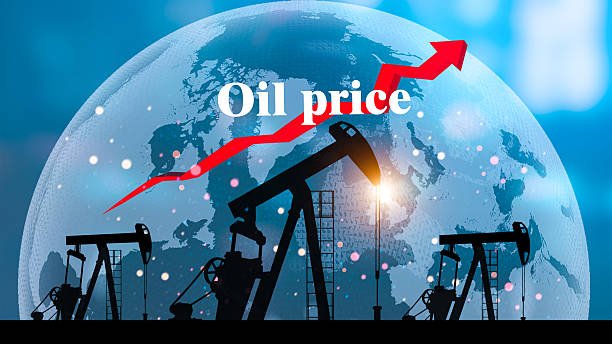
On the morning of 1 March 2026, traders arriving at their desks in London, Singapore, and Chicago were confronted with a number that did not look real. Brent crude had closed the previous session above $90 a barrel, up from roughly $70 where it had sat at the start of the year. Within days it was trading within a whisker of $120. The cause was a set of American and Israeli air strikes on Iranian infrastructure that had begun on 28 February and the near-immediate closure of the Strait of Hormuz that followed. In the weeks ahead, North Sea Dated crude would swing across an unparalleled range of almost $50 a barrel in a single month, touching $144 before collapsing below $100 and bouncing again a volatility band that exposed not just the fragility of global energy supply, but a deeper structural truth about oil markets that economists have understood for decades and policymakers have consistently chosen to ignore.
The question worth asking and worth answering honestly is not whether a war in the Middle East causes prices to rise. That is settled history. The question is why a disruption of roughly 8% of global supply can produce a price increase of 50 to 60 percent. The answer lies in a single economic concept: inelasticity. And understanding it explains not just why fuel prices skyrocket, but who benefits when they do.
The Physics of an Inelastic Market
In a normal goods market, when supply falls by 8%, prices rise by something approaching 8%. The market clears, buyers adjust, and equilibrium is restored. Oil does not work this way, because neither demand nor supply can adjust quickly. The price elasticity of US demand for oil is often estimated at around -0.05 in the short run meaning that a 10% rise in price reduces consumption by only half of one percent. People cannot immediately switch cars, convert factories, or reroute supply chains. Airlines cannot ground their fleets when jet fuel rises; farmers cannot stop running tractors at harvest; cold chain logistics cannot choose a different energy source by next Tuesday. Demand, in the short run, is essentially fixed. And when the demand side of a market is fixed and the supply side shrinks, even modestly, prices do not rise modestly. They spike
In 1973, the Arab oil embargo removed approximately 7% of global supply and caused a 300% price increase from $3 to $12 a barrel. In 1979, the Iranian Revolution disrupted roughly 4% of global supply, yet prices more than doubled. These are not anomalies. They are the same mechanism repeating: a small supply shock, a demand curve that cannot bend, and prices that must do all the adjustment work. The ratio small supply change, large price response is baked into the mathematics of how the market functions. Since 1979, regime changes and major disruptions in medium-to-large oil-producing nations have, on average, triggered a 76% increase in oil prices from onset to peak.
What amplifies this in 2026 is the geographic concentration of the shock. The Strait of Hormuz handles approximately 35% of global seaborne crude oil trade. There is no realistic alternative. Gulf exporters could reroute at most 3.5 million barrels per day through pipelines that bypass the Strait. But as long as the bulk of shipping traffic remains suspended, the world still faces a supply shortfall of approximately 15 million barrels per day. OPEC+ announced a 206,000 barrel-per-day production increase in an attempt to signal that supply was under control but Saudi Arabia and the UAE, the only members with meaningful spare capacity, also need to export through Hormuz. When the bottleneck is the strait itself, spare capacity on paper is largely irrelevant.
Fear as a Price Multiplier
The physical disruption is only part of the explanation. The other part is futures markets, and they operate on anticipation rather than reality. Traders, hedge funds, and institutional investors do not wait for oil to disappear from refineries. They buy contracts the moment they perceive that oil might become scarce. This transforms a geopolitical event into a financial one almost instantaneously. A Financial Times investigation found that $580 million in bets on falling oil prices were placed just 15 minutes before Donald Trump published a statement postponing attacks on Iran in March 2026. A second series of suspicious bets worth $950 million on falling prices appeared on 7 April, again shortly before a policy shift was announced. The oil price, in other words, was moving not just on barrels but on statements, signals, and inside information turning the commodity into something closer to a geopolitical derivative than a simple measure of physical supply and demand.
Research confirms that war-related geopolitical shocks generate stronger and more persistent effects on oil price dynamics than geopolitical threats alone, precisely because they confirm risk rather than merely flag it. A threat can be walked back. A bomb crater in an oil refinery cannot.
The Hidden Architecture of Profit
Into this mechanism step the oil majors, positioned by geography, vertical integration, and financial sophistication to convert every crisis into a profit event. The world’s top 100 oil and gas companies banked more than $30 million every hour in unearned profit in the first month of the Iran war, with estimated windfall profits of $23 billion for March alone driven by the gap between their production cost and a market price inflated by war.
What makes this structurally significant rather than merely scandalous is how those profits are deployed. ExxonMobil’s adjusted profits reached $8.8 billion in Q1 2026. The company remained on pace for $20 billion in share buybacks while maintaining its quarterly dividend, with its CEO describing production growth as “grounded in value, not volume.” Shell, earning $6.9 billion in the same quarter, described its commitment to returning 40 to 50% of cash flow to shareholders as “sacrosanct.” The capital is not flowing into new production capacity that might eventually reduce prices. It is flowing to shareholders. The five oil supermajors have recorded profits of nearly half a trillion dollars since Russia’s invasion of Ukraine, returning $444 billion to shareholders through dividends and buybacks a figure exceeding the EU’s entire clean energy spending in 2025.
A Mechanism, Not a Crisis
What fifty years of oil shocks reveal is that this is not a series of unfortunate events. It is a mechanism one in which geographic concentration of supply, inelastic demand, financialised commodity markets, and vertically integrated producers combine to ensure that every outbreak of Middle Eastern conflict reliably transfers wealth upward and outward. The arithmetic that made a 7% supply cut produce a 300% price rise in 1973 is the same arithmetic that made a roughly 8% supply disruption produce a 50-60% price spike in 2026. The numbers are different. The structure is unchanged.
As of June 2026, with an interim US-Iran peace deal under negotiation and Strait of Hormuz flows beginning to recover toward 12 million barrels per day, Brent has retreated to around $81 still $20 above pre-war levels. The crisis, in other words, is moderating. The structural condition that made it possible is not. Until energy demand becomes genuinely flexible through electrification, diversification, and storage capacity the next Middle Eastern conflict will repeat the same calculation, with the same winners, and the same people left paying for a war they did not choose.
By Abhishek Goswami
Legal Intern @Singhania & Co.
College: NMIMS, Navi Mumbai
BBA, LLB