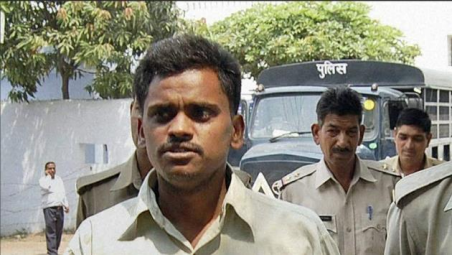

Imagine walking into the nearest police station to report a crime. The officer on duty looks up, smiles warmly, and speaks in a calm, respectful tone.

“Sir, please be seated. Tell me what happened. I am here to record your complaint or register an FIR, whichever you prefer. I am at your service.”
If this actually happens, you may collapse on the spot and need immediate hospitalization. Not because of the crime you suffered, but because such courtesy still feels almost impossible in India.
For most citizens, approaching a police station is an experience filled with fear, hesitation, and uncertainty. Questions race through the mind. Will they listen? Will they refuse? Will they ask me to go elsewhere? Will they threaten me with arrest? Will they say it is not their jurisdiction? Will they slap me for arguing? Will I end up in custody for pushing too hard?
And like this, countless questions keep dancing in the mind—one leading to another, endlessly. This emotional barrier is real, and our lawmakers knew it.
That is why the law did not wait for ideal behaviour. Instead, it chose a different path. It redesigned the procedure itself, ensuring that justice does not depend on the mood of the police officer, the location of the crime, or the courage of the victim. From this thinking emerged some of the most citizen‑friendly but least discussed legal tools in our criminal justice system.
This article explores one such silent safeguard that exists precisely because reality is not perfect.
When trouble strikes, it rarely checks the address of the nearest police station. A woman harassed while travelling, a cyber fraud discovered late at night, a road accident in an unfamiliar city—in moments like these, the law should move faster than fear.

Few people know that Indian criminal law already provides such a safety net through the concepts of Zero FIR and eFIR, quietly empowering ordinary citizens when they feel most helpless.
For years, people were turned away from police stations with one common excuse—that the incident did not fall within local jurisdiction. Victims were asked to travel across cities, sometimes across districts, just to lodge a complaint. This delay often meant loss of evidence, fading memories, and deep emotional exhaustion.
Zero FIR was developed to break this barrier. It allows the police to register information about a cognizable offence regardless of where it occurred. The word zero simply means that the case is registered without assigning a regular number at that stage and is later transferred to the appropriate police station.
The importance of this rule cannot be overstated. Time is crucial in criminal law. Medical evidence, electronic trails, CCTV footage, and eyewitness accounts can disappear within hours. Zero FIR ensures that the law responds immediately, without forcing the victim to first solve the puzzle of jurisdiction. Once registered, the responsibility shifts to the police—where it rightly belongs.
Alongside this protection, the law has also stepped into the digital age through eFIR. This provision recognizes that approaching a police station is not always easy or safe. Victims of cybercrime, sexual offences, or threats may hesitate due to fear, distance, or intimidation.
eFIR allows information to be given through electronic means such as online portals or email, ensuring that the first cry for help is formally recorded.
However, the law balances convenience with authenticity. An electronically sent complaint does not become a full FIR instantly. The person giving the information is required to sign and confirm it within a prescribed period. This safeguard protects both citizens and the system by preventing misuse, while still ensuring that delay does not defeat justice. The electronic message secures the timeline and preserves the initial version of events.
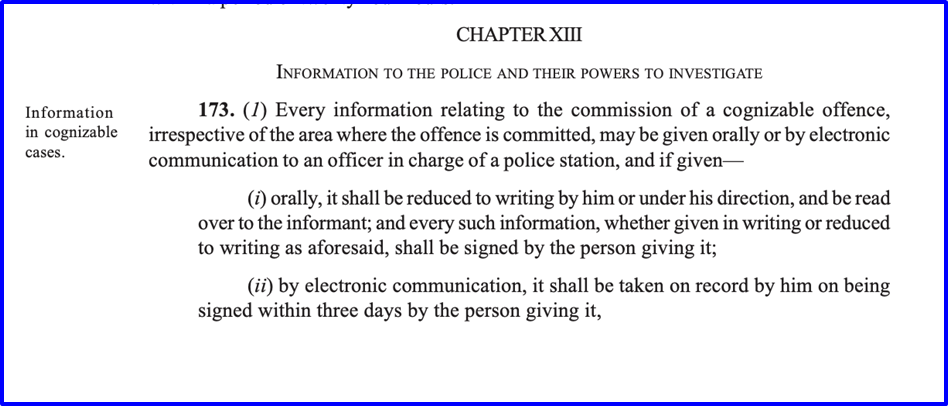
A powerful aspect of the present legal framework is that Zero FIR and eFIR are not separate islands—they work together. A person can report a cognizable offence electronically even if it occurred outside the local area. This effectively creates an electronic Zero FIR.
The police receiving such information are legally bound to act, register it, and take the next procedural steps. Refusal to register such information is not a minor lapse; it is a serious breach of duty.
The law provides remedies if a police officer fails to act. The information can be sent to senior officers, and persistent inaction can invite legal consequences. This shifts the balance of power away from discretion and towards accountability.
When a citizen is turned away, the law does not expect them to stay silent. One practical step—often overlooked—is to inform the emergency response system itself. A calm call to 112, stating that a cognizable offence is being reported and that registration has been refused by a particular police station, creates a time‑stamped official record.
It is not a substitute for an FIR, and it does not force immediate action. But it documents the moment when the system failed to open its door. Such records can later support a complaint before a Magistrate, showing that the citizen tried—responsibly and lawfully—to seek help.
What makes these provisions truly transformative is their human focus. They recognize fear, confusion, and vulnerability as real barriers to justice. They accept that citizens may not always know legal boundaries—but should never be punished for that ignorance. The law, in these moments, chooses compassion over formality.
Awareness is the final missing link. A right that is unknown is a right unused. Zero FIR and eFIR are not special favours or rare exceptions. They are legal entitlements meant to protect dignity, safety, and access to justice.
The next time someone hears that a police station has no jurisdiction, they should remember that the law has already answered that excuse.
This series seeks to bring such lesser‑known legal protections and exceptions into public conversation. Because justice is not only about courts and judgments. Sometimes, it begins with knowing that the law will listen—no matter where you stand or how you speak.
“Injustice anywhere is a threat to justice everywhere.”
— Martin Luther King Jr.
By Sanjay Joil
B.Com, LL.B., F.I.I.I., DCL (INTL)
Co‑founder, JOILAW AI Private Limited