

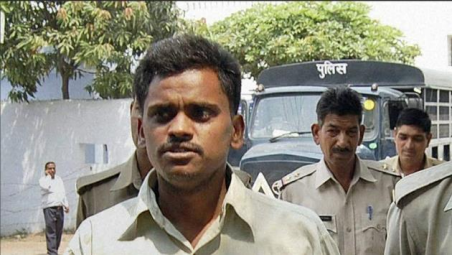
Justice did not fail in Nithari — investigation did.
In December 2006, the nation woke up to one of the most horrifying criminal revelations in modern India, when skeletal remains of children were discovered scattered in drains behind a bungalow in Nithari, Noida. Over the next several weeks, investigators recovered dozens of bones and body parts, many of them belonging to young girls who had gone missing from the area over the past two years.
The house belonged to a businessman, Moninder Singh Pandher, and his domestic help, Surinder Koli, who was immediately arrested. What followed was a storm of public outrage. Koli was painted as a cold-blooded serial killer, accused of abducting, sexually assaulting, murdering, and dismembering victims. Trial courts convicted him repeatedly and handed down multiple death sentences. The case came to symbolize one of the darkest chapters of India’s criminal history.
And yet, nearly two decades later, the same man once known as the “Butcher of Nithari” walks free — not because the crimes did not happen, but because the investigation meant to prove his guilt collapsed under the weight of its own failures.
This outcome has left many deeply unsettled. How can someone sentenced to death multiple times re-enter society? How can crimes of such brutality result in such an unsatisfactory legal conclusion? It is natural for anguish to turn into anger and for society to seek a target. However, the judiciary is not that target.
The uncomfortable truth is this: it was the State that failed to conduct a competent investigation. This is a case lost not for lack of crime, but for lack of competence.
When Procedure Fails, Justice Fails
The acquittal does not imply that the crimes never occurred. The skeletal remains recovered from drains, the disturbing pattern of missing children, and the devastation of affected families are undeniable realities. What collapsed was not the horror — it was the prosecution.
A criminal case stands on admissible evidence gathered through lawful procedure. When procedure is bypassed or violated, even the most shocking allegations cannot sustain a conviction.
The Nithari investigation was riddled with grave procedural lapses. Confessions were extracted under questionable circumstances, without legal counsel, rendering them legally inadmissible. Crime scenes were left unsecured, allowing evidence to be contaminated. There were significant delays in forensic examinations, undermining their scientific reliability. Bones recovered from open drains were never credibly linked to the accused.
Crucial investigative leads were ignored, including possible angles involving organ trafficking and the potential involvement of individuals other than the accused. A case grounded in flawed procedures cannot deliver justice.
The courts did not fail; the investigation did. When investigators err, the public pays.
The Human Cost of Investigative Failure
Every procedural failure carries a human cost, and in Nithari, that cost is immeasurable. Families may never learn the truth about what happened to their children. Victims’ suffering is erased by technical lapses. Society is left watching accused individuals walk free — not because they are innocent, but because the State failed to prove guilt lawfully.
This is not merely a departmental failure; it is a failure of duty.
The people did what they could. They filed missing persons reports. They protested. They demanded accountability. It was the institutions tasked with protecting them that failed to act responsibly.
Blame is often directed at courts, but courts can only work with the evidence placed before them. Judges cannot convict on emotion or public outrage. They must uphold constitutional safeguards, even for the accused.
A conviction achieved by bypassing procedure is not justice — it is vengeance disguised as law. Both wrongful convictions and wrongful acquittals corrode public trust in the system. Procedural safeguards protect not just the innocent, but the integrity of justice itself.
Why Accountability in Investigations Is Crucial
One of the most troubling features of India’s criminal justice system is that investigative failure rarely carries consequences. Officers who mishandle cases often retire without repercussion, while victims’ families endure lifelong grief.
This culture of impunity is dangerous. It leads to wrongful arrests, fabricated confessions, mishandled evidence, public panic, and real criminals remaining unidentified.
If the Nithari case is to hold any meaning, it must trigger a demand for accountability in investigations, not merely calls for judicial reform.
Investigators who violate procedure must face:
- Departmental penalties
- Suspension or dismissal
- Criminal charges for evidence tampering or negligence
- Civil liability for constitutional violations
Without accountability, tragedies like Nithari will recur — and justice will continue to be delayed or denied.
The Real Lesson: Justice Needs Competence, Not Speed
Public outrage often pressures the State to act swiftly. But justice cannot be rushed. It demands precision, methodology, restraint, and expertise. A poorly constructed case is worse than no case at all.
Once an accused is acquitted, constitutional protections such as double jeopardy prevent retrial for the same offence. A sloppy investigation does not merely fail to punish the guilty — it permanently shields them.
The Nithari case is not only about a brutal crime; it is a lesson in how systemic negligence can sabotage the truth-seeking process.
Our real fight is not against procedure, but for it.
The tragedy of Nithari lies not only in the loss of children, but in the collapse of the system designed to protect them — from investigation to prosecution. This failure leaves a grieving community with unanswered questions.
If India seeks justice for its people, it must demand excellence, training, independence, and accountability from investigative agencies. Courts can deliver justice only when investigators provide credible, lawfully obtained evidence.
Until then, acquittals like this will continue — not because laws are weak, but because the systems enforcing them are flawed.
Conclusion
The Nithari prosecutions have legally concluded with the 2025 ruling, but the issues they expose remain unresolved. The Court upheld a fundamental principle of criminal law: no conviction can stand unless the process itself is legitimate and trustworthy.
This ruling does not condone innocence, nor does it diminish the suffering of the victims. It serves as a stark reminder that suspicion, outrage, and shortcuts cannot sustain justice.
If the Nithari case is remembered only for the heinousness of the crimes, its most important lesson will be lost. The true warning is this: investigative incompetence can permanently close the door to truth.
The 2025 ruling is not an indictment of the judiciary, but of a system that failed to investigate competently. Justice in cases like Nithari will remain fragile — not due to a lack of law, but due to a failure in execution — until procedural integrity and accountability are treated as non-negotiable.
Until then, the true criminals will continue to walk among us, concealed not by darkness, but by our own procedural failures.

Article By Radhika Rungta
Legal Intern @ Singhania & Co.