
Introduction
Climate change is not just something scientists worry about anymore it is a problem that affects laws and rules in many countries. We are seeing a lot of things happen like seas getting higher rain not coming when it should extremely hot weather and more natural disasters. These things are not just ideas they are real. They affect a lot of people. In India these environmental problems are hurting farming peoples health, their ability to make a living and the economy. So courts are becoming an important place to solve problems related to climate change.
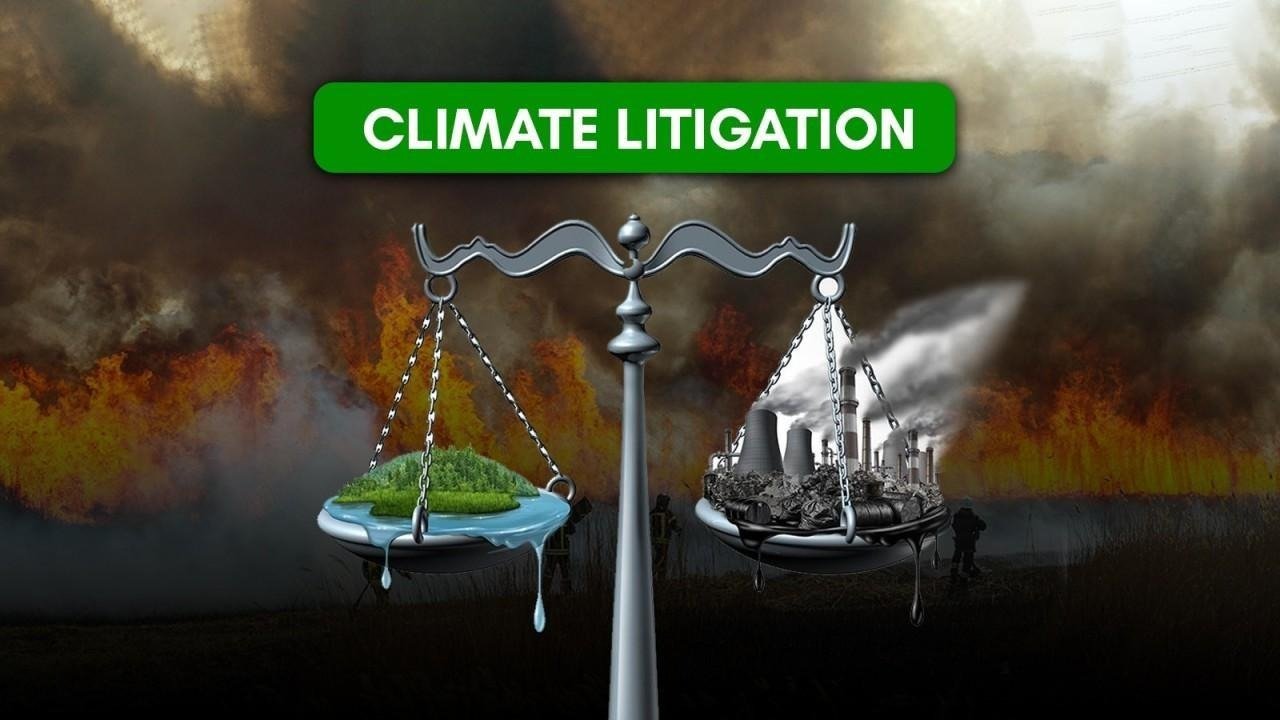
One of the ways that people can get help from courts about environmental issues is something called Public Interest Litigation or climate change litigation. This means that ordinary people, activists and groups can go to courts to protect the rights of everyone and the environment. By doing this climate change litigation is becoming a way to make sure that the government is doing what it should to protect the environment and respect the
rules of the country. Climate change is a deal and climate change litigation is helping to hold people in power accountable for what they do, about climate change.
Understanding Climate Change Litigation
Climate change is a problem, and people are taking it to court. They want the courts to make sure that the people in charge are doing something about climate change. This includes making greenhouse gas and stopping the earth from getting hurt. The government and big companies have to do what they promise to do about climate change.
A lot of people around the world are going to court about climate change. The courts have to decide if the government is doing enough to stop climate change. In India people are just starting to go to court about climate change. They are saying that the government is not doing enough and that some companies are hurting the earth.
These cases are important because they are about the rights of people and the earth. People are saying that climate change is a threat to our lives and the lives of our children and grandchildren. Climate change is a problem and the courts have to help figure out what to do about it. People are talking about climate change. The courts are listening to what they have to say about climate change.
Public Interest Litigation: A Gateway to Environmental Justice
Public Interest Litigation is one of the most revolutionary developments in Indian constitutional law. Traditionally, courts required strict locus standi, meaning only the directly affected person could approach the judiciary. However, the Supreme Court relaxed this rule during the late 1970s and 1980s to enable access to justice for marginalized communities.
Through PIL, any public-spirited individual or organization can file a petition before the Supreme Court under Article 32 or before High Courts under Article 226 seeking enforcement of fundamental rights or legal duties. This mechanism has played a vital role in environmental protection.
Environmental PILs have addressed issues such as industrial pollution, deforestation, air pollution, wildlife conservation, and river protection. Climate change litigation naturally fits within this framework because climate impacts often affect large populations rather than individual victims.
Constitutional Foundations of Climate Litigation
Indian climate litigation is based on the principles of the constitution. The courts have looked at parts of the constitution to increase protection for the environment.
The important part of the constitution for this is Article 21 which says that people have the right to life and to be free. The Supreme Court has always said that this article means people also have the right to clean air and water and to be healthy. So when the environment is damaged it is seen as taking basic rights that people are supposed to have. Indian climate litigation is really, about protecting these rights.
In addition to fundamental rights, the Constitution also contains provisions encouraging environmental protection:
- Article 48A directs the State to protect and improve the environment and safeguard forests and wildlife.
- Article 51A(g) imposes a fundamental duty on every citizen to protect and improve the natural environment.
When these provisions are read together, they create a constitutional framework that supports climate change litigation and environmental protection.
Role of Writ Jurisdiction in Climate Cases
Climate change litigation in India is often pursued through constitutional writs. Courts exercise their powers under Articles 32 and 226 to issue writs ensuring compliance with environmental laws and constitutional duties.
Some commonly invoked writs include:
- Writ of Mandamus
This writ directs public authorities to perform their legal duties. In environmental cases, courts may order government agencies to enforce pollution control regulations or implement climate policies.
- Writ of Certiorari
Courts may quash decisions of authorities that permit environmentally harmful projects without proper environmental impact assessments.
- Writ of Prohibition
This prevents authorities or tribunals from acting beyond their jurisdiction in environmental matters.
Through these writs, courts ensure that environmental governance remains accountable and transparent.
Environmental Principles Applied in Climate Litigation
Indian courts have developed several legal doctrines that play a crucial role in climate-related cases.
Precautionary Principle
This principle states that lack of scientific certainty should not be used as a reason to postpone measures preventing environmental harm. Courts apply this principle when environmental risks could cause irreversible damage.
Polluter Pays Principle
According to this doctrine, those responsible for environmental pollution must bear the cost of remedying the damage. Industries causing environmental degradation may therefore be required to compensate affected communities and restore ecosystems.
Doctrine of Public Trust
Under this doctrine, the State acts as a trustee of natural resources such as forests, rivers, and air.
These resources must be protected for public use and cannot be exploited solely for private profit.
Together, these principles provide a strong legal foundation for addressing climate change within environmental litigation.
Judicial Activism and Landmark Environmental Cases
Indian courts have been doing a job in helping us think about the environment in a new way through some big decisions. The M. C. Mehta cases are really important because they talked about things like stopping pollution, controlling industries and saving the Ganga River.
One big thing the Supreme Court did was tell Delhi to use compressed gas for its public transport to reduce pollution from vehicles. This case was mainly about air. It also helped a little with climate change by lowering the amount of carbon that goes into the air.
The M. C. Mehta cases and other cases like Vellore Citizens Welfare Forum v. Union of India are important because the Supreme Court said that we should be careful and the people who pollute should pay for it. The M. C. Mehta cases and these ideas have become tools, for dealing with environmental and climate issues in Indian courts. The M. C. Mehta cases will keep helping us think about the environment and what we can do to protect it.
Emerging Trends in Climate Litigation
Climate change litigation in India is evolving rapidly. Petitioners are increasingly framing climate change as a human rights issue, arguing that government inaction threatens fundamental rights to life, health, and livelihood.
Young activists, environmental groups, and civil society organizations are also becoming more involved in climate litigation. Their petitions often demand stronger climate policies, reduction of emissions, and stricter enforcement of environmental regulations.
Another emerging trend is the increasing reliance on international environmental agreements, such as the Paris Climate Agreement, to argue that India must fulfill its global commitments to reduce emissions and promote sustainable development.
Challenges in Climate Litigation
Despite its growing importance, climate litigation faces several challenges. Climate change is a complex global issue involving multiple actors and long-term scientific uncertainties. Courts often struggle to balance environmental protection with economic development.
Additionally, critics argue that excessive judicial intervention may interfere with policy decisions that should ideally be handled by the legislature or executive. Nevertheless, judicial oversight remains necessary to ensure that environmental governance remains consistent with constitutional values.
Conclusion
Climate change litigation represents a powerful intersection of environmental law, constitutional rights, and judicial activism. Through Public Interest Litigation and writ jurisdiction, Indian courts have provided citizens with a meaningful platform to challenge environmental harm and demand governmental accountability.
As climate change continues to intensify, the judiciary will likely play an increasingly important role in shaping environmental governance. By interpreting constitutional rights in light of ecological realities, courts can ensure that development remains sustainable and that environmental protection becomes a central element of constitutional justice.
Ultimately, climate change litigation is not merely about legal disputes; it reflects society’s broader struggle to secure a livable planet for future generations. Through PIL and constitutional writs, the law becomes a powerful instrument for protecting both human rights and the environment.
Anshuman Sinha
Intern At Singhania & Co.LLP
2nd Year LL.B from Jitendra Chauhan College of Law, Mumbai
References
- Intergovernmental Panel on Climate Change, Climate Change 2023: Synthesis Report, IPCC (2023);
- United Nations Environment Programme, Emissions Gap Report 2023 (UNEP, Nairobi);
- Ministry of Environment, Forest and Climate Change, India’s Third National Communication to the UNFCCC (Government of India, 2021);
- Vellore Citizens Welfare Forum v. Union of India, (1996) 5 SCC 647 – Recognition of the precautionary principle and polluter pays principle;
- Indian Council for Enviro-Legal Action v. Union of India, (1996) 3 SCC 212 – Application of polluter pays principle;
- M.C. Mehta v. Kamal Nath, (1997) 1 SCC 388 – Doctrine of public trust;
- M.C. Mehta v. Union of India (Oleum Gas Leak Case), (1987) 1 SCC 395;
- M.C. Mehta v. Union of India (Delhi Vehicular Pollution Case), (1998) 6 SCC 60;
- Paris Agreement, 2015.