
Euthanasia is derived from the Greek words “eu” (good) and “thanatos” (death), which means “a good or peaceful death.” It is commonly referred to as mercy killing. It refers to the intentional acceleration of the death of a terminally ill patient through active or passive means in order to relieve the patient from unbearable pain or suffering.
- Passive Euthanasia: When a patient is allowed to die naturally by withholding or withdrawing medical treatment that sustains life.
- Active Euthanasia: When a physician administers lethal drugs to end the life of a terminally ill patient. In India, it is prohibited.
Euthanasia’s Legal Status and History in India
Euthanasia has long been a contentious legal and moral issue in India. In Gian Kaur v. State of Punjab (1996), the Supreme Court held that the “right to life” under Article 21 did not include a “right to die,” emphasizing the preservation of life.
The 196th Law Commission Report (2006) distinguished between “mercy killing” and the “withdrawal of life support.” It argued that refusing medical treatment that merely prolongs the process of dying is a “lawful omission.” The 241st Law Commission Report (2012) reiterated this position.
In the landmark ruling of Aruna Ramachandra Shanbaug v. Union of India (2011), the Supreme Court first allowed passive euthanasia under strict guidelines, subject to High Court supervision and a medical board. However, this judgment was limited to cases where patients were in a permanent vegetative state (PVS) and unable to express consent.

In Common Cause v. Union of India (2018), the Supreme Court recognized the right to die with dignity as part of the fundamental right to life under Article 21 of the Constitution. In addition to legalizing passive euthanasia, this decision established the concept of a “living will,” a written document that allows a person to express their preferences for medical care in the event that they become terminally ill or incapacitated.
In Common Cause (Modified Guidelines, 2023), the Court simplified the process by reducing the role of judicial officers and establishing a two-tier medical board system to make decisions faster and more practical.
However, the practical application of this right remained largely theoretical until the Harish Rana case in 2026, giving real meaning to the constitutional right to die with dignity.
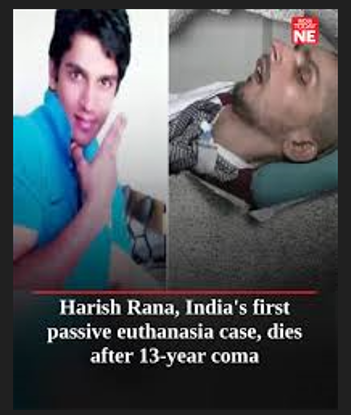
Harish Rana Case: The First Passive Euthanasia Case
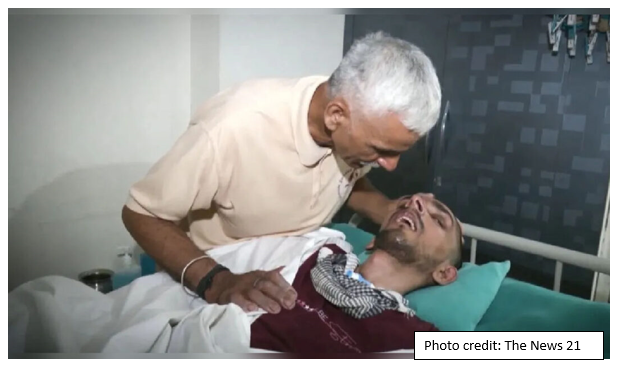
Harish Rana, a 32-year-old engineering student, had been in a permanent vegetative state since a 2013 accident, when he fell from a fourth-floor balcony and suffered sustained diffuse axonal injury.
For over 13 years, his parents cared for him at home, using feeding and tracheostomy tubes to sustain him. Emotionally and financially exhausted, they eventually sought the court’s permission to withdraw life-sustaining treatment.
First, the Delhi High Court denied the plea in 2024. On March 11, 2026, the Supreme Court granted Harish Rana passive euthanasia. Justices J.B. Pardiwala and K.V. Viswanathan’s two-judge bench decided that clinically administered hydration and nutrition also qualify as medical treatment and can be stopped when there is no hope of recovery. On March 24, 2026, Harish Rana passed away peacefully under medical supervision at AIIMS, Delhi, after the withdrawal of his life support.
Future Developments and Ethical Considerations
While the Supreme Court has set broad principles, India still lacks a comprehensive legislative framework to guide hospitals, doctors, and families through the euthanasia process. The Court urged the Union Government to pass comprehensive legislation in its conclusion.
These judicial guidelines would be codified by a clear parliamentary law, giving medical professionals much-needed clarity and guidelines governing medical boards’ assessment of euthanasia cases. In addition, there is a need to raise public awareness of patients’ rights and palliative care options, and to streamline the process of executing and registering living wills.
Euthanasia remains one of the most profound moral dilemmas of modern society, involving a balance between the sanctity of life and the right to a dignified death. The Harish Rana case has transformed the abstract idea of “dying with dignity” into a living legal reality, giving hope to countless families facing prolonged suffering. As laws evolve, the challenge will be to ensure that decisions about life and death are guided not by despair or neglect, but by empathy, consent, and respect for human dignity.
References
- https://www.bbc.com/news/articles/cvgkp52njj7o
- https://www.visionias.in/blog/current-affairs/passive-euthanasia-in-india-what-the-harish-rana-case-means-for-end-of-life-care
- https://www.livelaw.in/articles/passive-euthanasia-jurisprudence-526423
By
Awantika Dubey
3rd Year BBA LLB (Honors)
University of Mumbai Law Academy
Intern @Singhania & Co.