
How Britain lost its governing edge?
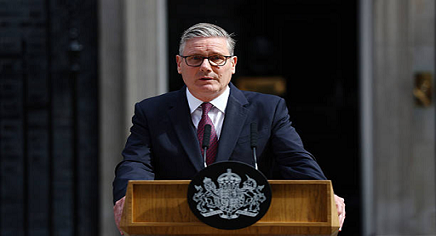
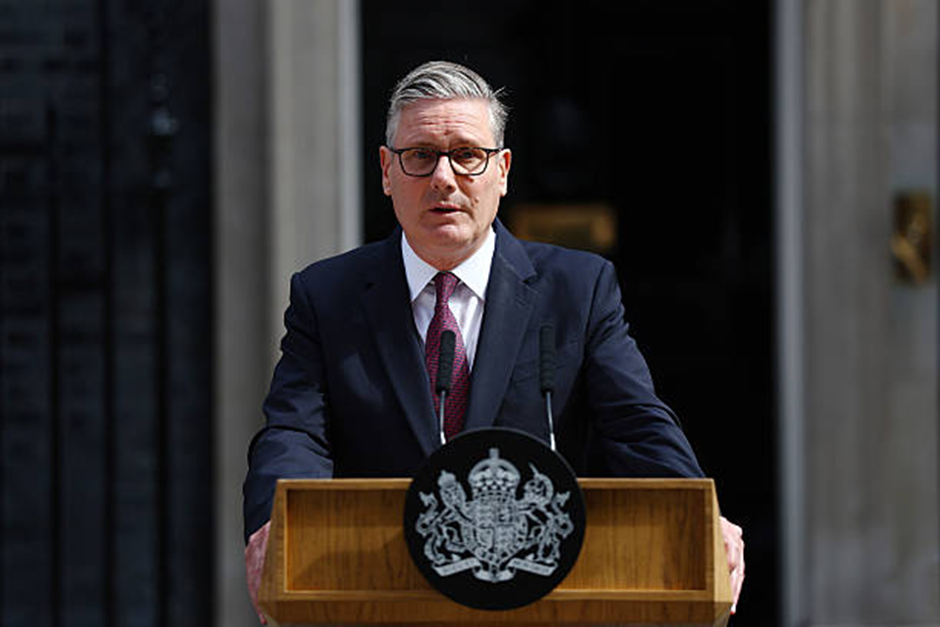
In the spring of 2026, Keir Starmer walked to a podium outside 10 Downing Street and announced his resignation. It was a moment that barely registered as remarkable because by then, Britain had grown accustomed to prime ministers leaving. Since 2016, the UK has had six prime ministers, averaging one every one and a half to two years, compared with the decade-long tenures of Margaret Thatcher and Tony Blair. A seventh is now on the way.
Step back from the immediate politics and the scale of what has happened becomes genuinely difficult to process. This is the country that ran a quarter of the world’s land surface from a small island off the coast of Europe. The country that industrialised before anyone else, that invented the modern central bank, the steam-powered factory, the telegraph, and the joint-stock company. For two centuries, the British Empire was the closest thing the world had ever seen to a global operating system setting trade rules, controlling sea lanes, and minting the reserve currency of its era. Now it cannot keep a prime minister for two years.
The story of how this happened is not the story of empire’s end. That story the two world wars, the retreat from India, the Suez humiliation was largely concluded by 1970. What happened after is something more specific, more avoidable, and more instructive. Three policy choices, made in the space of fifteen years, quietly dismantled the conditions that had made Britain governable.
The first was austerity. In 2010, the coalition government implemented what became one of the most severe public spending contractions in modern British history more than £80 billion in cuts to public spending. The political logic was deficit reduction. The economic consequence was structural decay.
More than a decade later, real earnings have barely recovered to pre-crisis levels, productivity growth has remained weak, and long-term economic damage is evident in underfunded infrastructure and an increasingly fragile NHS. The NHS alone now faces maintenance backlogs across schools, hospitals, courts, and prisons standing at £23.7 billion, alongside a shortage of 50,000 nurses and 12,000 hospital doctors.
A state that cannot deliver basic services to its citizens loses legitimacy faster than any opposition party can manufacture a crisis. Britain’s austerity decade did not balance the books the fiscal deficit in 2023–24 was 5.7% of GDP, compared with 2.9% in 2007–08 but it did hollow out the institutions that ordinary people depend on, creating a slow-building fury that would eventually find its expression at the ballot box, and then at the ballot box again, and then again.
The second decision was Brexit. In June 2016, Britain voted to leave the European Union by a margin of 52% to 48%, following a referendum campaign of exceptional dishonesty on multiple sides. The economic verdict is now in, and it is unambiguous. By 2025, Brexit had reduced UK GDP per capita by an estimated 6–8% compared with what it would have been had Britain remained in the EU. Investment was 12–18% lower, employment 3–4% lower, and productivity 3–4% lower. Translated into fiscal terms, the Commons Library estimates that the smaller economy costs between £65 billion and £90 billion less in annual tax receipts the equivalent, at the upper end, of roughly £250 million a day. Brexit did not just cost Britain trade and investment. It consumed four prime ministers and nearly a decade of parliamentary oxygen, leaving every other policy question housing, energy, social care, industrial strategy unattended while Westminster fought with itself over the terms of its own departure from a trading bloc it had helped to build.
The third decision was subtler than the other two but arguably more corrosive: the systematic erosion of institutional trust through a series of scandals, reversals, and what can only be described as performative governance. Liz Truss, who served as prime minister for 45 days in 2022, introduced an ill-conceived stimulus plan including drastic tax cuts that caused economic and political chaos, wiping out her support and triggering a bond market crisis within weeks of taking office.
The episode was not simply a personal failure. It was proof that the machinery of democratic accountability had broken down that a party with an 80-seat majority could install a leader committed to policies that markets, civil servants, and the public all understood to be dangerous, with no mechanism capable of stopping her until the damage was done.
The compound effect of these three choices has been a Britain that is poorer, less confident, and less credible than its peers. Tax as a share of GDP in the UK will likely reach its highest level since 1947 this year. The UK stock market currently ranks 11th globally by market capitalisation. Over the previous decade, the S&P 500 grew by 183%, against effectively zero growth in the FTSE 100. Capital, like people, votes with its feet. In 2024 alone, an estimated 10,800 high-net-worth individuals left Britain. That figure is expected to rise to 16,500 in 2025, resulting in the outflow of approximately $92 billion in investable assets. The destinations Dubai, Singapore, Switzerland, Portugal are not chosen for their weather. They are chosen because those countries have made coherent decisions about what kind of economy they want to be.
The lessons for developing nations are sharp and do not require elaboration. Fiscal discipline means nothing if the state dismantles the public services that make the workforce productive. Democratic processes cannot bear the weight of a referendum on a question whose consequences span generations, when the campaign is fought on slogans. And institutional credibility, once spent, is not restored by elections alone it requires years of competent, consistent governance that compound rather than cancel each other out.
Britain invented parliamentary democracy. It wrote the rules of constitutional government that half the world then adopted. It spent two centuries telling other countries how to build stable institutions. The painful irony of 2026 is that the country now most in need of that advice is the one that gave it. The sun, having set on the empire long ago, appears to be setting on something else not power, but the self-assurance that made power possible. Whether a seventh prime minister can begin to reverse that is a question that depends less on the individual than on whether Britain is yet willing to confront which decisions broke it.
By Abhishek Goswami
Legal Intern @Singhania & Co.
College: NMIMS, Navi Mumbai
BBA, LLB